Hébert Haute parfumerie the canadian dream bottled

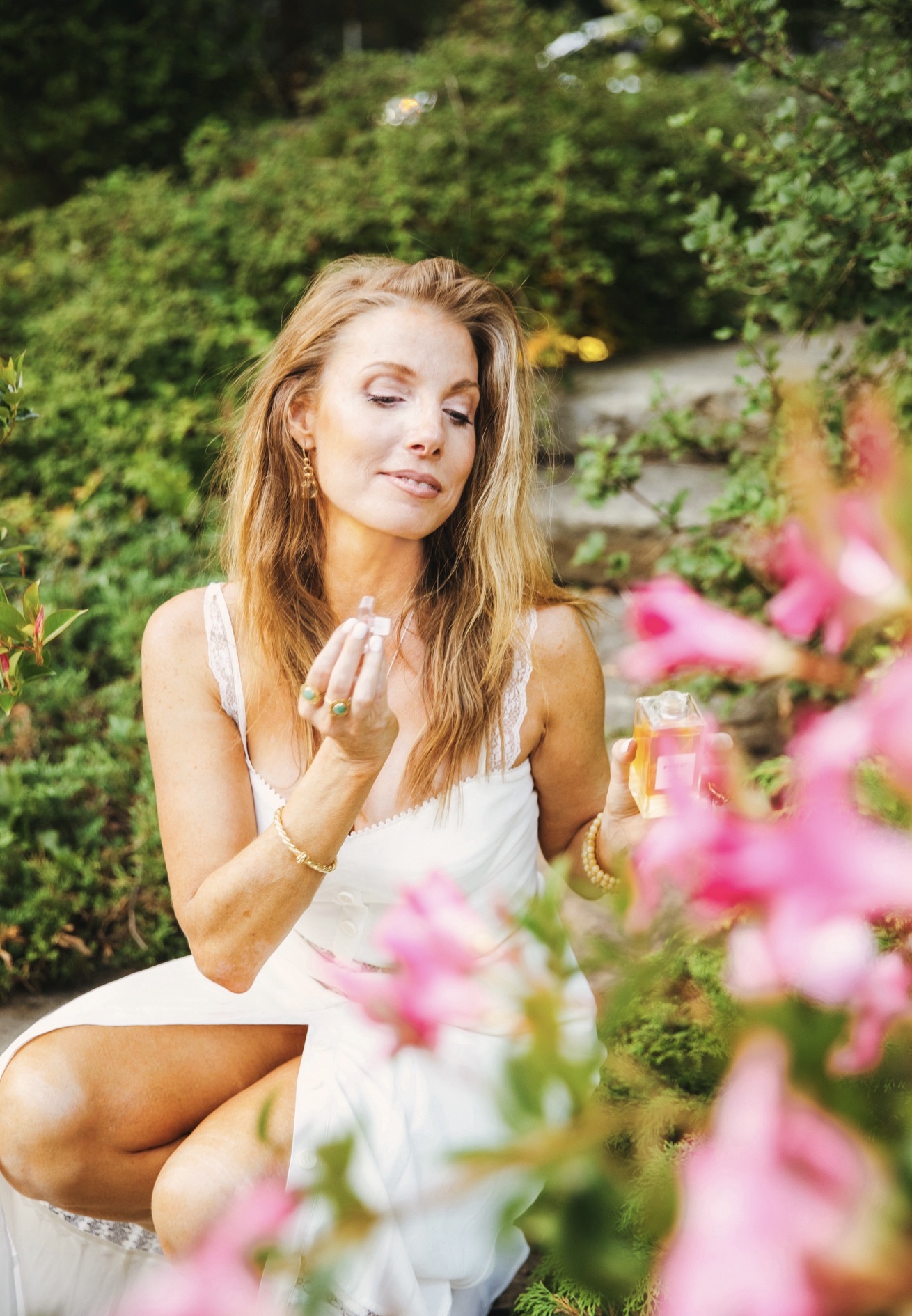
The Montreal Gazette Grand-Prix Insert, Diary of A Social Gal (June 2026) – “Perfume became my language, my way of expressing emotion and memory,” said fragrance connoisseur Claude André Hébert. His eponymous Montreal-based niche luxury line, Hébert Haute Parfumerie, has risen to esteemed international ranks in the world of curated, intentionally batched fragrances. Canadian-dreamy scents like Le Bûcheron (“The Lumberjack”) — boasting notes of Québéquois sugar pie, earth musk, and dampened wood — are now showcased at the famed Sens Unique in Paris, a ‘scent boudoir’ specializing in ultra-rare fragrances.
ICYMI, young fragrance connoisseurs abound thanks to TikTok. And Hébert has legendary status for bringing iconic perfume Angel to mass market in 1995 as Thierry Mugler’s commercial regional manager.

Now with his own line, Hébert is a master of small-batch precision. Considered craftsmanship, using bookish theory and sustainable approaches, has become the insider alternative to mainstream industrial fragrance production.

Each scent unfolds from a tailored narrative of impressions and memories woven together with olfactory poetry. The finest, responsibly sourced materials from historic origins in India, Italy, and France are then deepened through a long maceration process. Le Bûcheron is drawn from “men who measure their days by the swing of the axe, where sweat glistens amid balsam needles,” reads the label.

“It’s really for high-end people who understand it. Each fragrance needs to go with the personality exactly. You either connect with it or you don’t,” Hébert said. Like those we love most, the more profound the chemistry, the more magic.

Here I must confess: I’m in a campaign for Hébert Parfum’s Victoria, with notes of orange zest, berries, jasmine, rose, and cedar. Hébert’s inspiration was a blend of Queen Victoria and the women on Victoria Ave., where I bought it.

“She moves through life like a melody, each step a testament to her innate poise and cer-tainty,” the eau-de-toilet is described. I’d fallen for the aroma — and its siren story.

When natural-light photographer Vivian Doan snapped family portraits in my garden, she suggested holding a prop. I playfully went for the perfume. Hébert adored the photos and asked if I’d be his fragrance muse. I was flattered. “The coincidences are so real. I love it,” he said.


Maison Alysia’s Alysia Yip-hoi Martin a goddess of jewel revival

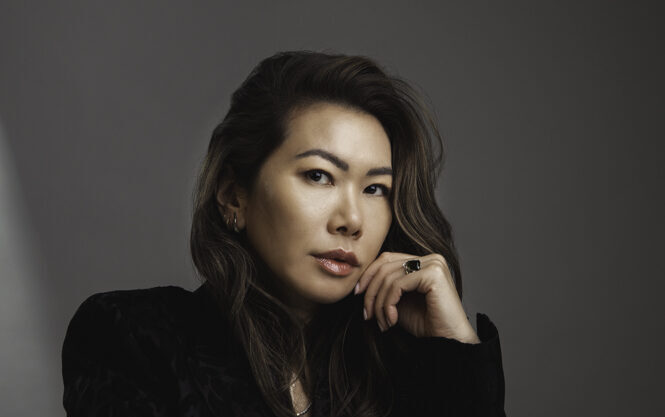
If diamonds are forever, stunning and supremely talented fine-jewellery designer Alysia Yip-Hoi Martin is graced with goddess-like eternalness.

Alysia channels her otherworldly gifts into her eponymous jewellery line, Maison Alysia, a best-kept secret of the Montreal fashion elite—a you-know-if-you-know (ykiyk) fashion house for the super luxe. Her beguilingly beautiful jewels shine with opulence thanks to her using only solid gold and platinum and the finest ethically sourced stones. Yet the contemporary nowness and edgy halo effect that illuminate her pieces are thanks to her incredible out-of-this-world knack for redefining classics for the future.

Her latest Maison Alysia collection takes the sensibility of old regal heirlooms and updates them with fresh design. An ethos of sustainability threads it together and adds an enduring soul. “We have to consider sustainability these days. And unlike transient clothes or furniture, you can reuse stones and gold, and it’s the same stones and gold your mother held close to her heart—and then someday your kid can attach their own memories to it,” she says.

Many Maison Alysia pieces are made-to-order for the company’s haute-flying, ultra-stylish clientele, eager to revive a gem they scooped up on an exotic excursion or who want to reinvigorate an emerald or diamond keepsake from deep inside their jewellery collection with Alysia’s ultra-cool glisten.

Fortunately for non-heirs, Alysia’s sultry and sophisticated Berceau collection pieces can also be bought on MaisonAlysia.com—only these one-off, gasp-worthy originals sell out almost immediately, though they can be custom made in a similar inspiration. Pieces include vintage brooches refashioned as a genius ultra-hip “Firefly” double-ring worn on two fingers. One spear is set with an amethyst stone, the other with aquamarine. This not-quite-matching “sisters-not-twins” asymmetry is a common theme in her pieces.

Other Maison Alysia designs are made from new materials yet still have the quality of an heirloom that’s been masterfully up-leveled. One stunner necklace features an emerald-hued mythical glass cameo floating in a skeleton setting of recycled 18-karat gold and seemingly hanging on by a thread, perched onto a weightless swing. The fluidity, mobility, and delicateness of her designs are a counterpoint to the richness of her materials. And the edgy youthfulness of, say, her Quis paperclip-style bracelet gives her collection an ultramodern look. But again, it’s Alysia’s je-ne-sais-quoi larger-than-life halo effect that gives the collection a coveted air of timelessness redefined.

Mysterious as it is, what I can say for sure, being blessed to call Alysia a close friend, is that her shimmering influence—along with her creativity, talent, hilarious wit, and super-pumping heart—graces everything in her sphere beyond jewellery design. She’s married to a most wonderful and super-kind husband and is the proudest mom of two beautiful girls. And Alysia’s prestigious philanthropic contributions reveal how generous and diverse she is with her talents. She’s a board director of the Opéra de Montréal and a board director of the Visual Art Center. She’s a member of the Decorative Arts Acquisitions Committee and Executive Committee of the “Women of Influence” circle at the Musée des Beaux-Arts (MMFA). And she’s also co-chair of the Kahnawà:ke Cultural Arts Cabinet and also on the Women’s Committee of Centraide.

She’s both well-educated and a natural ambidextrous flamethrower. Her M.F.A. in Industrial and Furniture Design is from Accademia Italiana in Florence, and her B.F.A. is in Sculpture at Concordia. Her seamless move from furniture designer to fine jewellery designer was thanks to the well-trained eye of illustrious Montreal jeweller Eric Goldberg of Atelier Lou. He saw the potential in Alysia’s fashion and furniture design aesthetic and offered her an opportunity to design a collection. She nailed it with her beloved capsule collection, which included a saucy horn-shaped ear pin and circular spinner rings where wearers could alter the position.

Her latest Maison Alysia designs are even more lyrical. “It’s chapters, it’s characters, it’s plots,” she says of her revival pieces. Then she recounts the story of a personal gift she designed for her mother-in-law. It was a brooch she’d inherited from her grandmother-in-law, repurposed into a ring with diamonds. “She shows everybody in her family; do you remember this brooch? Then she tells stories about the jeweller that she and her mom used to buy from.”

And that’s how Alysia’s goddess-like talents flow. She takes the light within her and reshapes tarnished gold so that it shines anew. And from there, she pushes it forward into forever.

A Fab Fur Fete – Part One Meet The Fur-Flential Fur Mamas

AS THE PANDEMIC MADE ABUNDANTLY CLEAR, SOME OF OUR GREATEST ALLIES WERE OF THE PET VARIETY. HOW COULD WE NOT MAKE THEM STARS OF THIS REIGNITION EDITION? MY PARTNER IN BRINGING THIS FUR FEATURE TO LIFE, TASTEMAKER/LENSER CARRIE M., CARRIES US AWAY (IN THE BEST WAY) …

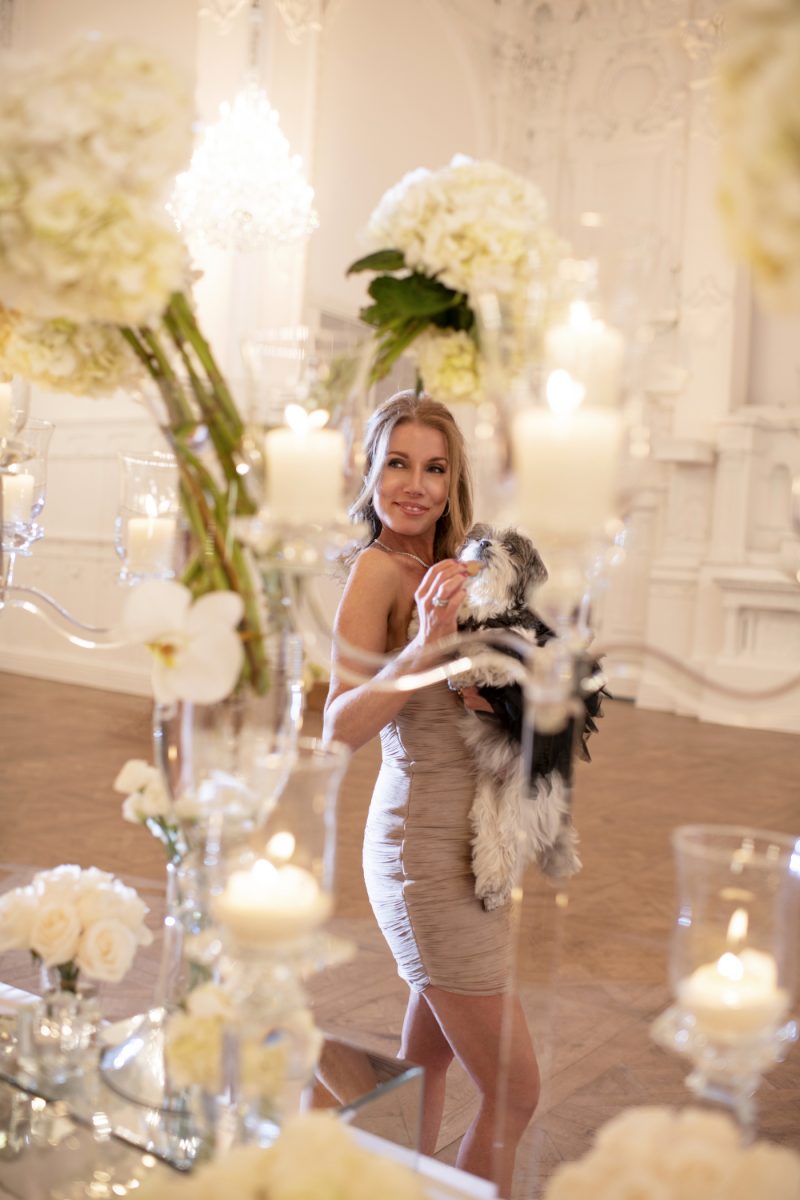
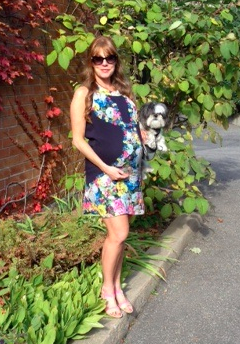
First up (oops furrrst) we meet a gaggle of powerhouse Social Gals, who like so many, derived much solace and comfort over the past two years (and still going!) from the unconditional affection and steadfast companionship of their devoted four-legged friends. As for the creativity and magic these savvy creators put out into the world, (bow) wowwww is the buzzword … Equipped with all kinds of enviable skill sets, each consistently makes the planet more interesting and beautiful with content worth seeking out and enjoying on the reg. Heck, don’t take our word for it. be sure to visit their inspiring platforms and let us know what you think.  (As for all the tips and tricks you’ll need for glorious fur fetes worthy of the presh pets, link here).

Special feature presented in collaboration with Maison Principale, featuring fashions from HOLT RENFREW OGILVY, ALAIN SIMON FLEURS and magical MOËT POURS.

HOW I TRIED TO REJECT KIM KARDASHIAN-STYLE MATERNITY DRESSING AND FAILED 

*Story appeared in Huffington Post Canada.

PreggoFashion2Fancy-dancy baby bumps are all the rage, especially among the celeb set. And when I first got pregnant, it felt like Kate, Kim et al. were staring me down from the grocery aisles. Goading me into joining the fun.

But nay, I thought in protest. Maternity fashion was vanity gone haywire. Yeah, yeah, I loved dressing-up more than pretty much everyone I knew, but suction tight maternity dresses and bikini-clad #babybump selfies seemed to be crossing a line. The message: Women should (should! Bwa-haw-haw!) look their best always–before and after their water broke.

So I had a revelation, “I am going to let myself go!”–for those nine months. I would allow my body to roar au naturel. Also, to help combat wasteful capitalism–which I myself was often guilty of–I refused to buy a whole new maternity wardrobe. I was bringing a new life into the world, after all. It was time to be practical, ethical. Maybe I’d purchase some elastic-waist jeans, leggings, a few tops, but that was it.

For a few months, I lived on as this low-maintenance person. I wore whatever fit in my closet. I felt, um, good. Relaxed. “No nausea,” I reported to anyone who’d listen, as if this reflected my even keeled psychological state.

But by month five even my husband’s button downs were splitting on me like sausage casings. Still, half-imagining myself to be practical, I decided to buy large sized normal pieces (read: non-maternity) that I could re-wear postpartum, say with a belt.

Sweats weren’t exactly versatile. Rather, I needed just a few key outfits that could work from day to night–especially night. A pink A-line dress, a white kaftan, and a silky maxi soon followed. I brought them to my tailor, since roomy regular clothes don’t quite fit the way proper maternity ones might. A slit here and a plunging neckline there guided the eye just so–as in, away from my swollen hips and legs, and the grim-reaper veins on my ankles and hands.

True, it was all a tad indulgent, but overall, my plan still erred on sensibility. Or so I told myself.
I wore my new white kaftan for my stroll to the coffee shop. Compliments ensued, from baristas, from people on the street. “Hey hot mama,” a passenger hooted out a car window.

Did you say “hot mama?” Far from offended, the praise went down better than my vanilla Frappuccino–a wild declaration for this pregnant chick to make. And though the tiny growing baby inside couldn’t hear their words, I imagined he or she was feeding off my buzz. And that was when it occurred to me: My low-maintenance days were probably over.

“Wow, you look lovely,” my husband nuzzled into my neck. I had on the kaftan again, since I only had three outfits. But this time I wore it with wedges. And I got a blow out. Because it was near-impossible to flip over for my hair dryer with my gut.

Oh, yeah! Full of hormones, and knowing that the numbers on my scale were dashing up the ranks, the flattery made me feel like I was a star of some kind–even if just the star of my own life. Finally. After nearly two decades of agonizing dating, all that studying and working and weighing my talents against a tanking market–then to at last to find my love, get married, I finally, finally became pregnant!

And I was fancy!

I stormed back to my genius tailor, Hussein Padar, with a new python maxi, a khaki tunic, two navy print dresses, another kaftan, and a red spaghetti strap number. I bought them mostly on sale, mostly online. A few were donated from friends. Et voila. After his strategic sewing, I had a made-to-measure maternity wardrobe. Here I come! I mean, here we come.

Yet with each decadent step forward, my guilt followed. It wasn’t so much about spending money, because I knew I’d re-wear most things post-partum. Rather, I felt like I was endorsing the position that expecting women couldn’t take a frump day–that regardless of their health, wealth, or state of mind, women had to be attractive at all times.

But did I need to be a sex object 24/7 to the horrors of my internalized Gloria Steinem (pre-Sanders women-bashing Steinem, that is)?

Um, apparently.

Because I loved the praise–especially since every other person seemed to wonder if I was carrying twins, which I wasn’t (“are you sure?”). And I wasn’t covering up my stomach with a muumuu as pregnant women did decades ago. Instead, I was felt like shining at 150-plus-plus-pounds and with a 40-plus-plus-inch waist. At age 30-something, yet. I was a soon-to-be mom, not a teeny twenty-something we’re led to believe is the pinnacle of beauty, and I felt terrific. Curvy.

Most importantly, I had this telekinetic belief that adorning my bump was introducing my growing baby to the splendors of life, like flowers and artwork.

PreggoFashion1

A second thought settled in: Maybe maternity fashion wasn’t the devil incarnate after all; maybe there was something glorious about all these proud mommies grooming themselves and their young to be — and trying to attract their mates, despite having already mated. And if this amounted to celebs flaunting bandage dresses and crop tops with their blossoming midriffs, so be it. All this excess could be evidence of a good thing. The best thing.

It was now obvious to me: #babybump signaled that a new rounder, more maternal beauty standard was finally en-vogue. I had to raise my half-filled champagne glass to that.

So, during my recent second pregnancy, it was time for my sequel performance. My costumes were pressed and ready to go. As I waddled about with my beach ball stomach that held my 10-lb baby.

“You’re HUMONGOUS!” they cried.

Oh yeah! Bring it on. I took plenty of pics this time.

SuzanneandSophiesevenandahalfmonths

–SUZANNE WEXLER


How I Became Obsessed With Maternity Fashion, Kim-Kardashian Style

*Story appeared in Huffington Post Canada.


Fancy-dancy baby bumps are all the rage, especially among the celeb set. And when I first got pregnant, it felt like Kate, Kim et al. were staring me down from the grocery aisles. Goading me into joining the fun.

But nay, I thought in protest. Maternity fashion was vanity gone haywire. Yeah, yeah, I loved dressing-up more than pretty much everyone I knew, but suction tight maternity dresses and bikini-clad #babybump selfies seemed to be crossing a line. The message: Women should (should! Bwa-haw-haw!) look their best always–before and after their water broke.

So I had a revelation, “I am going to let myself go!”–for those nine months. I would allow my body to roar au naturel. Also, to help combat wasteful capitalism–which I myself was often guilty of–I refused to buy a whole new maternity wardrobe. I was bringing a new life into the world, after all. It was time to be practical, ethical. Maybe I’d purchase some elastic-waist jeans, leggings, a few tops, but that was it.

For a few months, I lived on as this low-maintenance person. I wore whatever fit in my closet. I felt, um, good. Relaxed. “No nausea,” I reported to anyone who’d listen, as if this reflected my even keeled psychological state.

But by month five even my husband’s button downs were splitting on me like sausage casings. Still, half-imagining myself to be practical, I decided to buy large sized normal pieces (read: non-maternity) that I could re-wear postpartum, say with a belt.

But sweats weren’t exactly versatile. I needed outfits that could work from day to night–especially night. A pink A-line dress, a white kaftan, and a silky maxi soon followed. I brought them to my tailor, since roomy regular clothes don’t quite fit the way proper maternity ones might. A slit here and a plunging neckline there guided the eye just so–as in, away from my swollen hips and legs, and the grim-reaper veins on my ankles and hands.

True, it was all a tad indulgent, but overall, my plan still erred on sensibility. Or so I told myself.
I wore my new white kaftan for my stroll to the coffee shop. Compliments ensued, from baristas, from people on the street. “Hey hot mama,” a passenger hooted out a car window.

Did you say “hot mama?” Far from offended, the praise went down better than my vanilla Frappuccino–a wild declaration for this pregnant chick to make. And though the tiny growing baby inside couldn’t hear their words, I imagined he or she was feeding off my buzz. And that was when it occurred to me: My low-maintenance days were probably over.

“Wow, you look lovely,” my husband nuzzled into my neck. I had on the kaftan again, since I only had three outfits. But this time I wore it with wedges.

Oh, yeah! Full of hormones, and knowing that the numbers on my scale were dashing up the ranks, the flattery made me feel like I was a star of some kind–even if just the star of my own life. Finally. After nearly two decades of agonizing dating, all that studying and working and weighing my talents against a tanking market–then to at last to find my love, get married, I finally, finally became pregnant! And I was fancy!

I stormed back to my genius tailor with a new python maxi, a khaki tunic, two navy print dresses, another kaftan, and a red spaghetti strap number. I bought them mostly on sale, mostly online. A few were donated from friends. Et voila. I had a made-to-measure maternity wardrobe. Here I (we) come.

Meanwhile, with each clumsy, decadent step forward, my guilt followed. It wasn’t so much about spending money (I really did re-wear most things post-partum.). Rather, I felt like I was endorsing the position that expecting women couldn’t take a frump day–that regardless of their health, wealth, or state of mind, women had to be attractive at all times. But did I need to be a sex object 24/7 to the horrors of my internalized Gloria Steinem (pre-Sanders women-bashing Steinem, that is)?

Um, apparently.

Because I loved the praise–especially since every other person seemed to wonder if I was carrying twins, which I wasn’t (“are you sure?”). And I wasn’t covering up my stomach with a muumuu as pregnant women did decades ago. Instead, I was felt like shining at 150-plus-plus-pounds and with a 40-plus-plus-inch waist. At age 30-something, yet. I was a soon-to-be mom, not a teeny twenty-something we’re led to believe is the pinnacle of beauty, and I felt terrific.

Most importantly, I had this telekinetic belief that adorning my bump was introducing my growing baby to the splendors of life, like flowers and artwork.

PreggoFashion1

A second thought settled in: Maybe maternity fashion wasn’t the devil incarnate after all; maybe there was something glorious about all these proud mommies grooming themselves and their young to be — and trying to attract their mates, despite having already mated. And if this amounted to celebs flaunting bandage dresses and crop tops with their blossoming midriffs, so be it. All this excess could be evidence of a good thing. The best thing.

Ok, there was obviously an undercurrent of narcissism involved too. But better to focus on the positives, such as how #babybump signaled that a new rounder, more maternal beauty standard was finally en-vogue. I had to raise my half-filled champagne glass to that.

So, during my recent second pregnancy, it was time for my sequel performance. My costumes were pressed and ready to go. As I waddled about with my beach ball stomach that held my 10-lb baby (“You’re HUMONGOUS!” they cried), I bid adieu to guilt–and took plenty of selfies.

Barbie Expo Montreal: The Only Review You Need to Read

*This article was first published on fab feminist site Bust.com


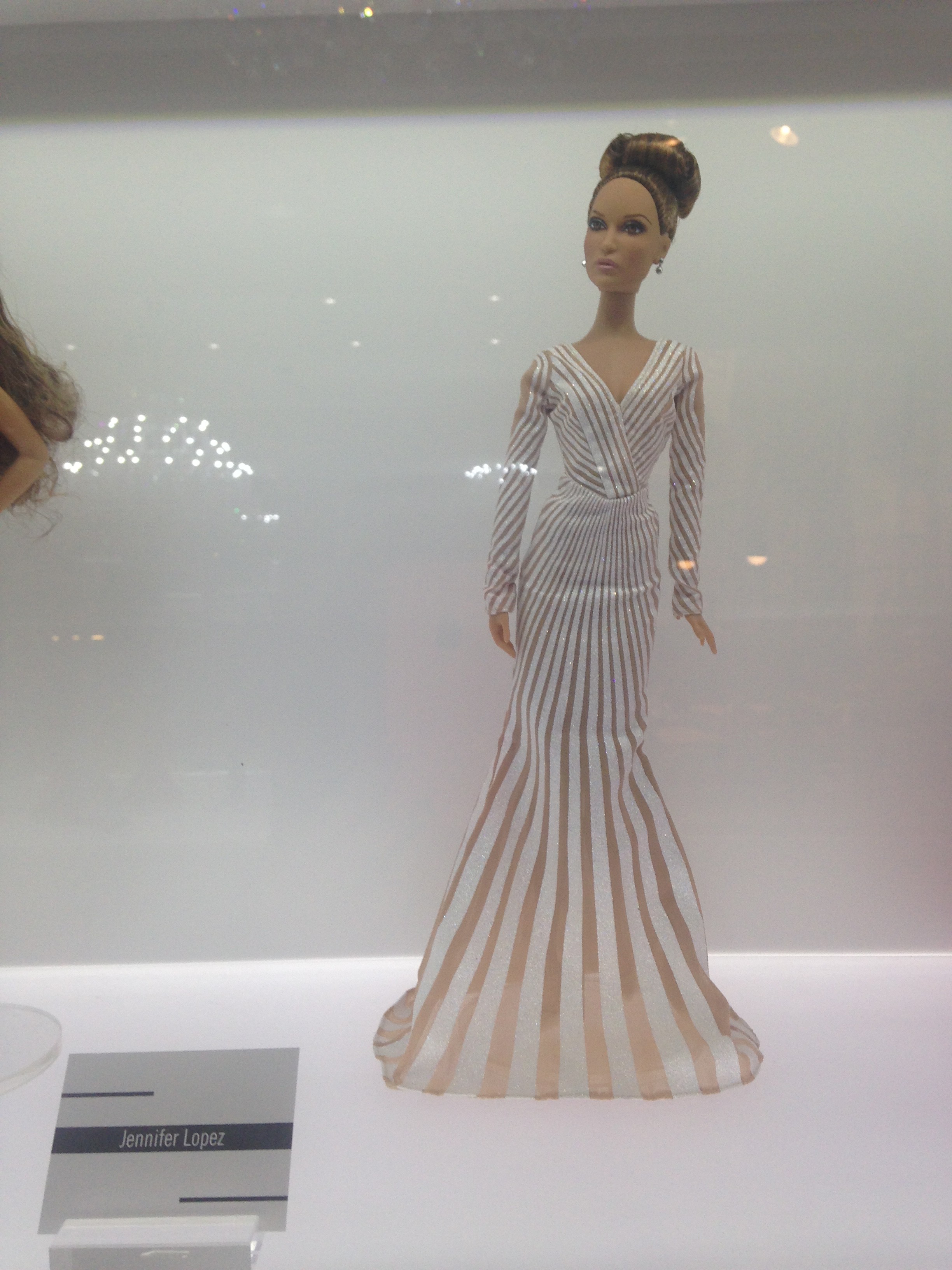
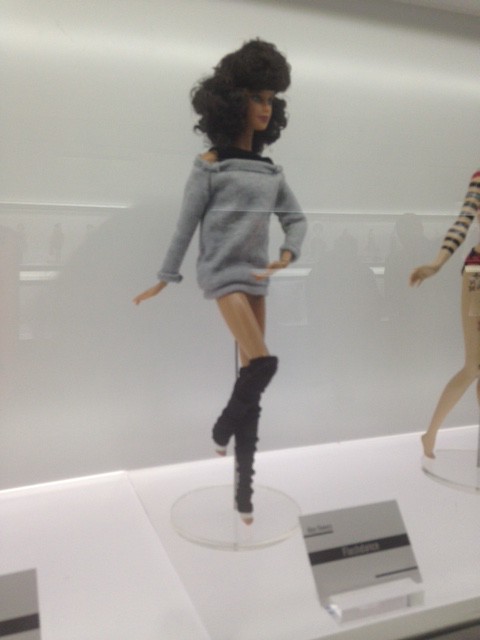
I loved Barbies as a kid. Then as an adult, I learned that the dolls were an embarrassment to humanity. Now, I’m back: I heart Barbie. My change of opinion happened after visiting the new BARBIE EXPO that opened mid-February in downtown Montreal. The must-see exhibit claims to boast the largest permanent collection of Barbie dolls in the world, from JLo and Duchess Kate Barbies, to Chanel and Vera Wang Barbies, to Steampunk Barbie with green hair and a long frightening coiled neck.

After perusing the expo’s mind-boggling array of 1000+ high-fashion Barbie dolls, I was reminded that Barbie is just a fun dress-up toy to inspire the imagination—and is probably not a symbol of all that is evil in this world.

BarbieJLo

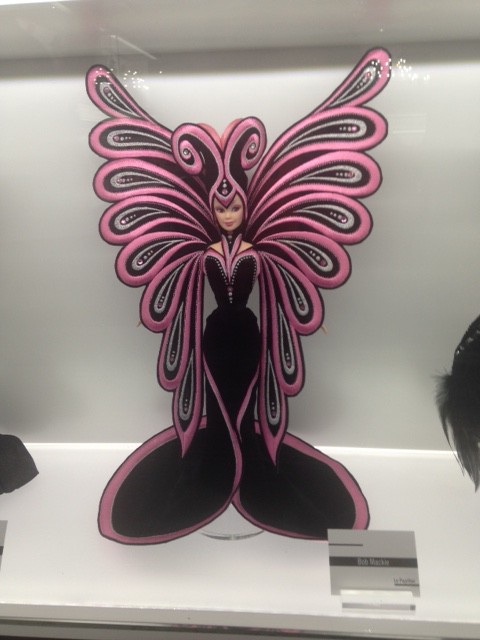
BobMackieBarbie


After Hijab Barbie and Mattel’s tall, curvy, and petite Barbies created recent media stirs, now in proper Montreal form, Barbie gets reinvented once again as a cool-girl with a fantastical fashion streak. This depiction manages to transcend Barbie’s locked and loaded reputation as an icon of conformity—a reputation Mattel has long tried to reinvigorate after she was introduced in 1959. But Expo Barbie likely succeeds in transforming her image because the collection was put together by independent curators, and not by Mattel. As such, these dolls don’t look like they’re trying to sell anything—they simply appear as fixtures of private life, and reflections of whoever bothered to collect or design the elaborate outfits in the first place (some garments went through 200 hours of fittings with their designer.).

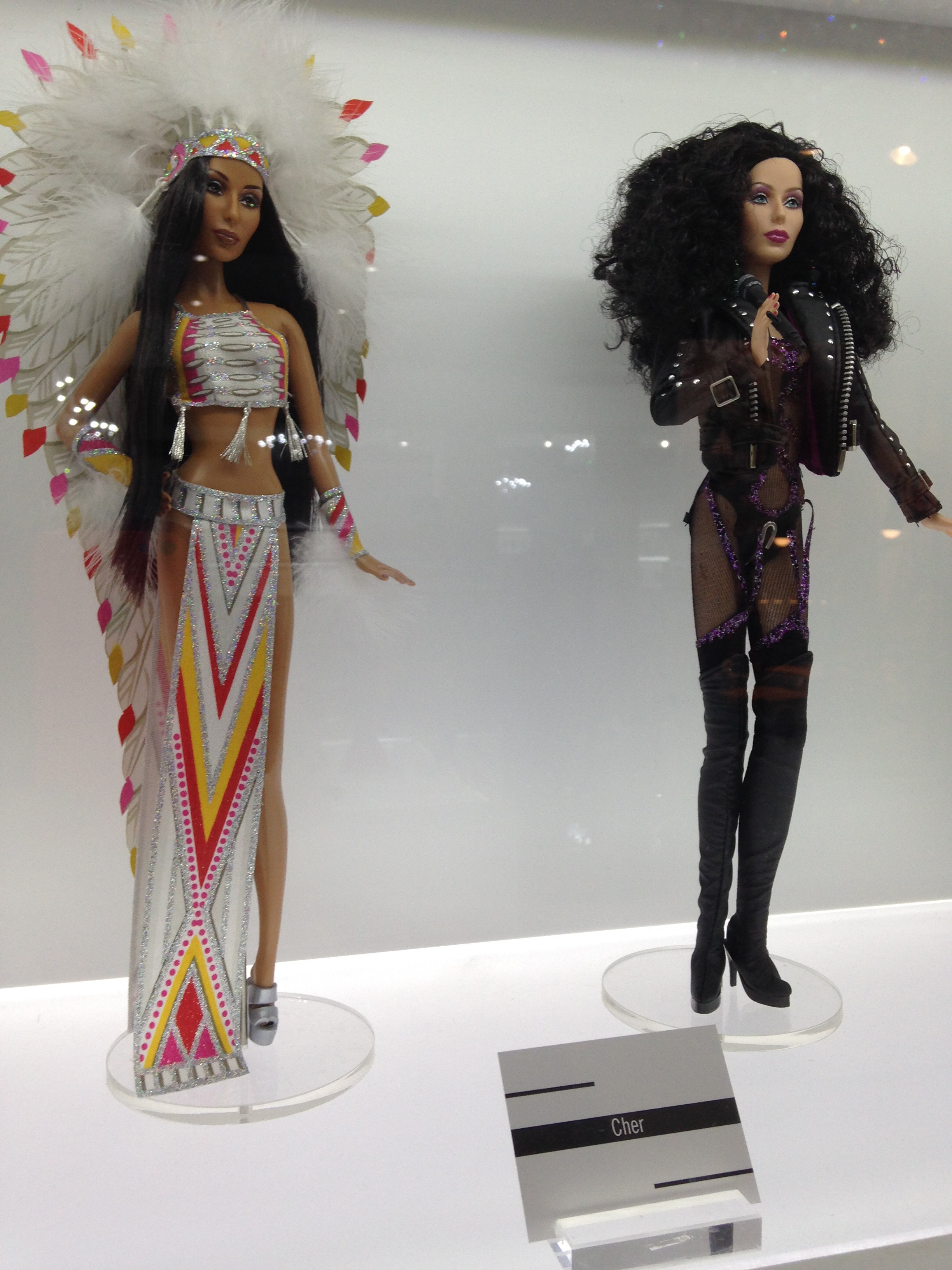
BarbieCher

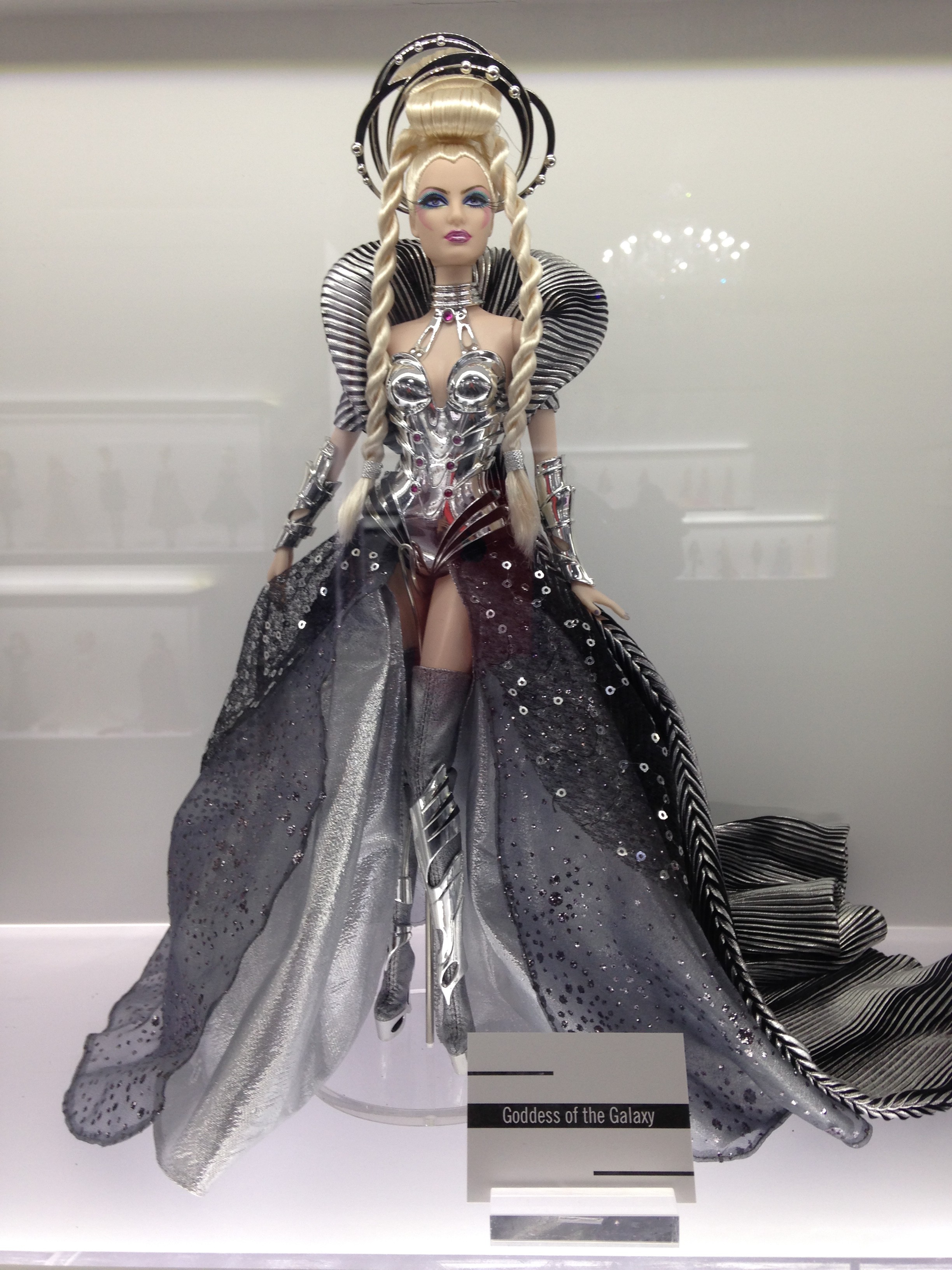
BarbieGoddessoftheGalaxy

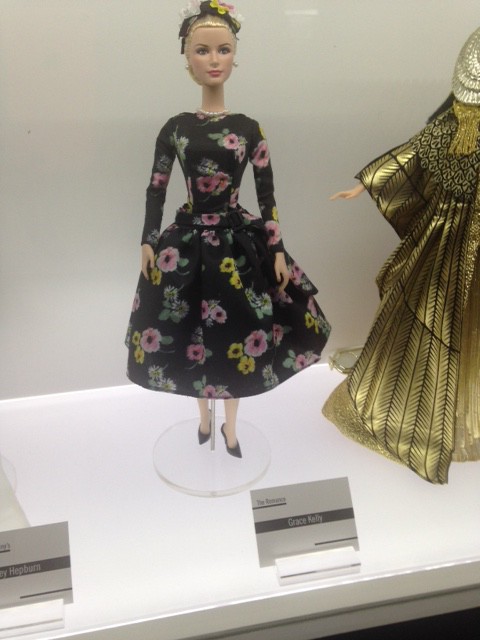
Grace Kelly Barbie

With Barbie as fashion muse, the exhibit is flying high with entertainment: There are Barbies à la Beyonce, Kimora Lee Simmons, Cher, Farrah Fawcet, Marilyn Monroe, and Princess Grace. There are dolls outfitted by Dior, Armani, Bob Mackie, and Ralph Lauren. Then there are Barbies donning feathers, kimonos, a sari. There are even underground alternatives tattooed Barbies. In terms of diversity, there are Barbies of various races and complexions represented, although the majority of dolls are white, though not necessarily blond. Barbie’s body proportions from head shape to height are even toyed with—though again, she’s almost always skinny, or in the case of Flashdance Barbie, gaspingly thin.

Flashdance Barbie

Even with the expo’s all-encompassing lens, the doll still gives off an unrealistic body image.

But overall, the expo creates a more forgiving impression of Barbie, allowing the doll to come across as whimsical and playful—a woman of reinvention like Madonna, or an eccentric style blogger of sorts—rather than a blond blue-eyed bombshell who mothers have come to protest against, not to mention who has attracted a string of tacky plastic-surgery enhanced followers. And like me, you may end up leaving the expo remembering Barbie as that childhood doll you adored because it was simply fun as heck to change her outfits—not because you were somehow brainwashed and misguided by the Dreamhouse fantasy.

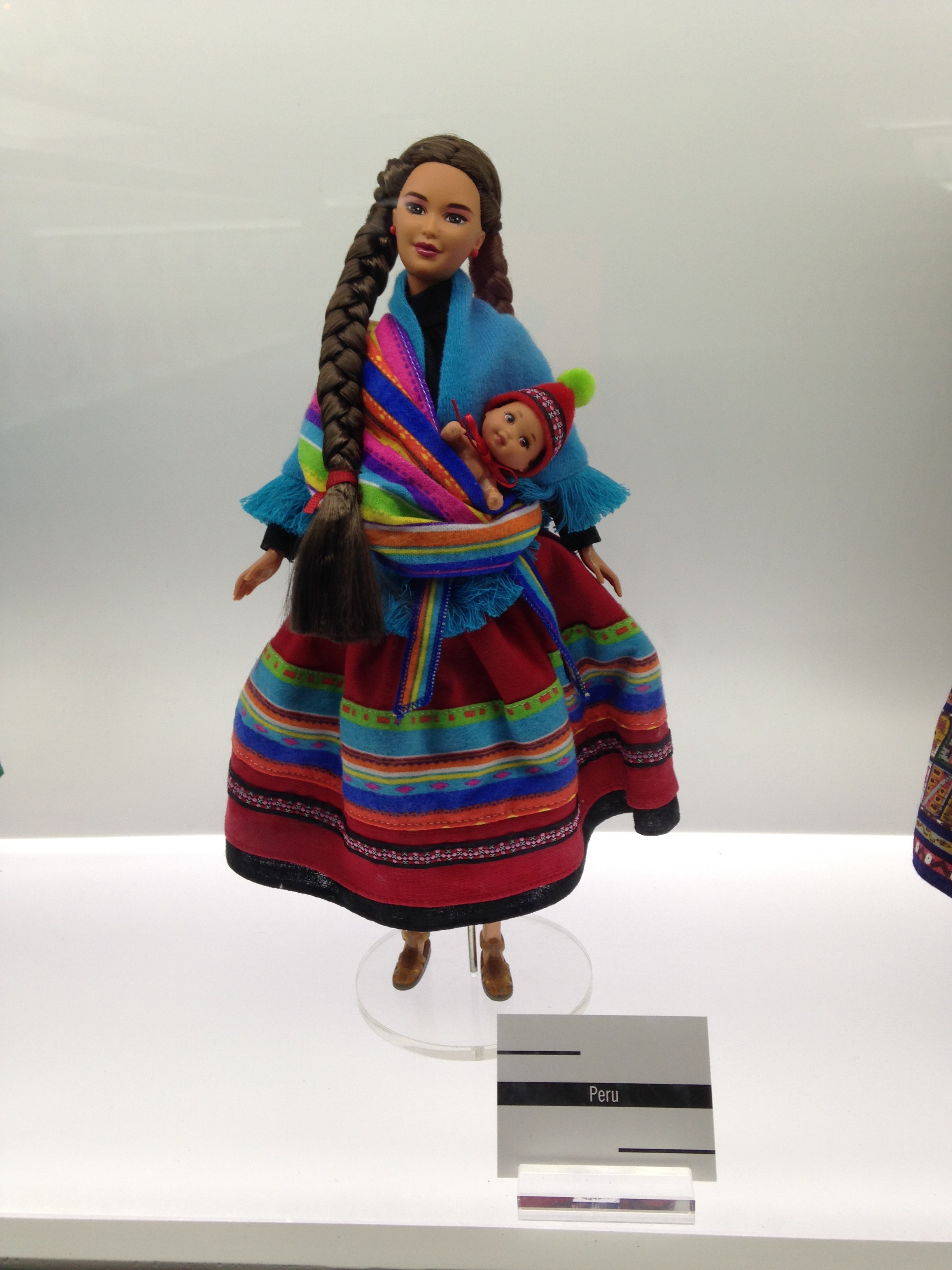
BarbiePeru

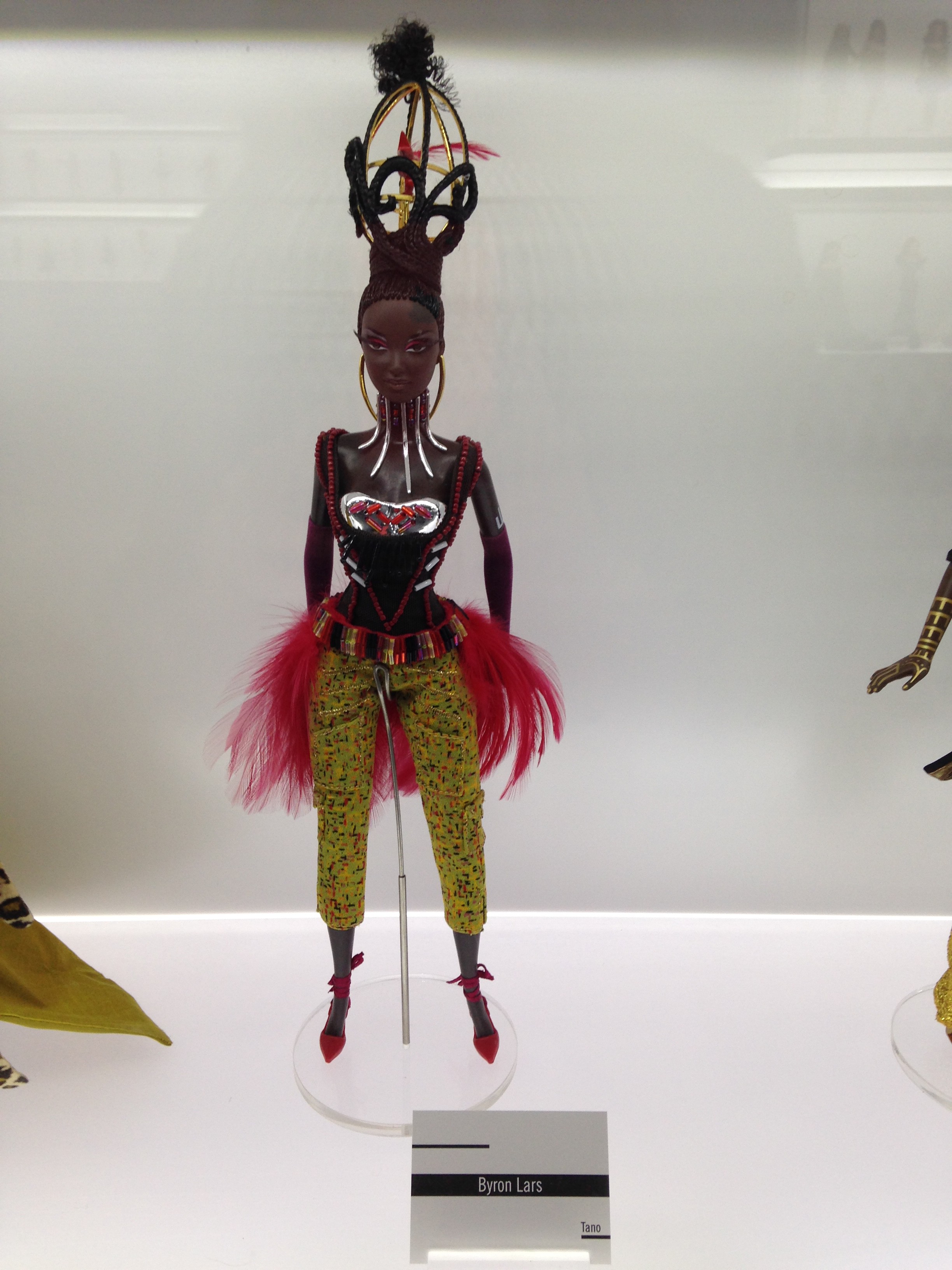
BarbieByronLars

The Barbie Expo was put together by the administration of Les Cours Mont-Royal, a shopping mall in downtown Montreal that was once regarded as the city’s mecca of fashion, but now has an unfortunate vacancy rate. Looking to bring-in a high-style attraction, the administrators created a committee of curators, architects, designers to collect the Barbie Expo dolls from around the globe. The team purchased some of the Barbies outright from collectors, while others were donated. The free-of-charge Expo gives 100% of proceeds from the suggested donations to the Make-A-Wish foundation of Quebec.

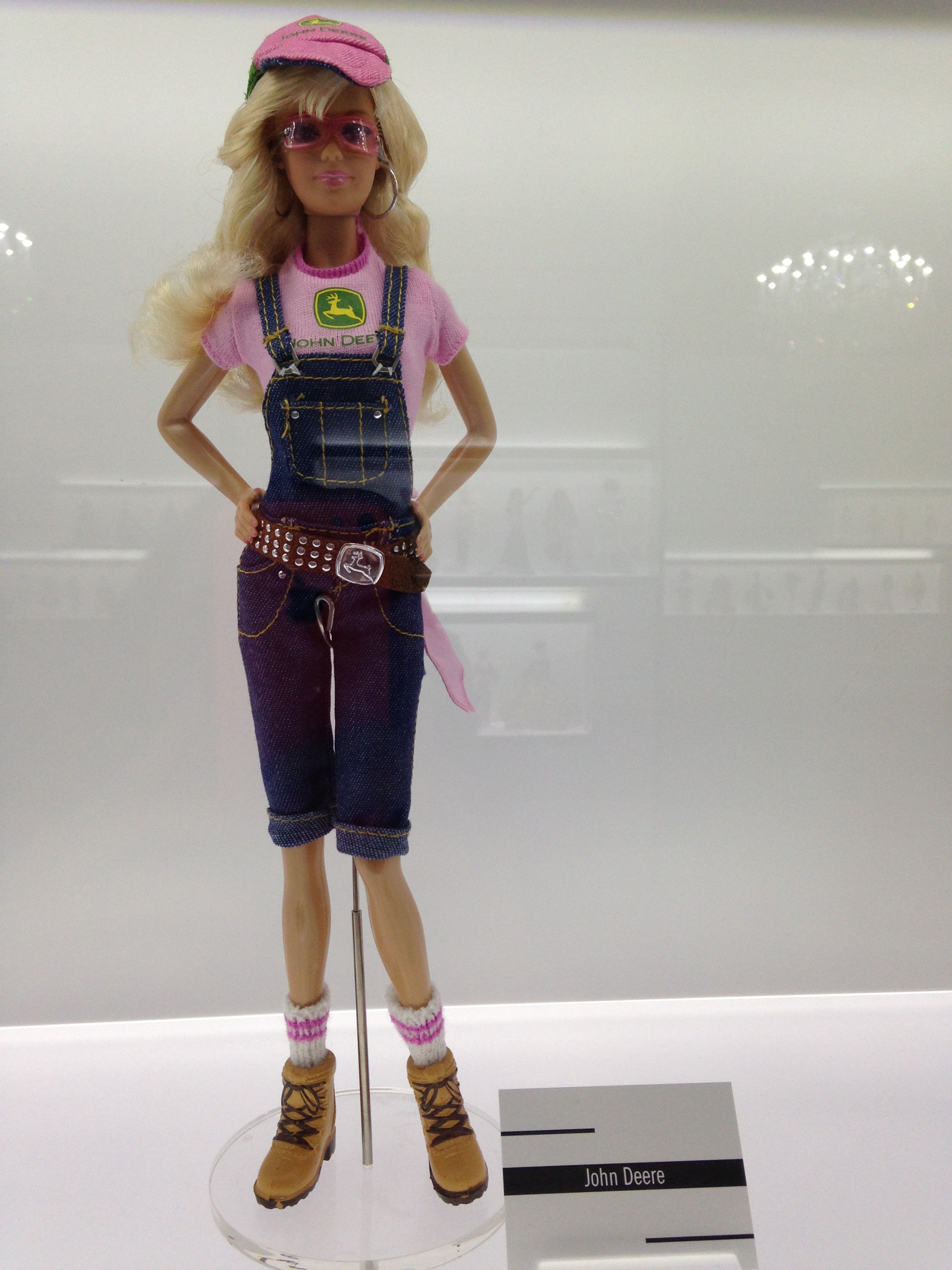
BarbieJohnDeere

Many of the Barbies featured were once sold to the public as limited-edition dolls by Mattel. Others were created by artists or private collectors themselves, allowing Barbie to surpass market barriers and enter more expansive spheres, such as the one exhibited by Hijab Barbie (a.k.a. @hijarbie), sewn by 24-year old Haneefa Adam of Nigeria (Hijarbie is not part of the exhibit).

“Pure coincidence,” Valerie Law said of the expo’s timing, which opened on Feb. 10, right on the heels of Barbie’s new silhouettes featured in Time, and moments after Hijab Barbie became an internet darling. Law is the VP of marketing for the Soltron Group that owns Les Cours Mont-Royal. “We brought this exhibition here to Montreal because it is a fashion capital. And no one is really highlighting that about the city.” Law cites the elegant Zuhair Murad Barbie as her favorite.

As Montreal’s Barbie Expo is not affiliated with Mattel, the exhibit is likewise sans bubble gum pink displays. (The much-maligned gender-specific sales presentation found in many toy stores is a stigma Mattel also tried to overcome by featuring a boy in a 2015 commercial.) Rather, at the expo, the backdrop is a fresh white and black, with swirling crystal chandeliers. This more classical, and far less dizzying environment is more suited to dragged-along daddies, brothers, or even not-quite-so girly-girls visiting the expo. Meanwhile, Barbie aficionado’s will have their eyes popping out at every turn. They may even find themselves manically posing in the Barbie selfie booth with #ExpoBarbie. (umm… guilty.)

Heads-up: There are no actual Barbies for sale at this independent charity exhibit. Also, curvy, tall, and petite Barbies and Hijarbie have yet to make their debuts at the Barbie Expo.


Once upon a time, while at The New School, Suzanne Wexler wrote her M.A. thesis on “The Erosion of Public Discourse: The Martha Stewart Trial and Other Provocative Tales.” It was supervised by the late and great Christopher Hitchens, along with linguist Melissa Monroe. After moving back to Montreal, she wrote feature articles and trend reports for major Canadian newspapers. She also got married and had some super-cute kids. Now she’s working on a book of humor essays. Find her at www.suzannewexler.com.

Do you BELIEVE in Green Drinks?


David "Avocado" Wolfe, spokesperson for the Nutribullet
David “Avocado” Wolfe, spokesperson for the Nutribullet

DO YOU BELIEVE IN GREEN DRINKS?

THE SUPER SIT-DOWN WITH SUPERFOOD SPECIALIST DAVID WOLFE (Aka the ‘NutriBullet guy’)

BY SUZANNE WEXLER
These days, celebs are obsessed with natural food diets, whether its Gwyneth promoting her latest clean-eating recipes in cookbook It’s all Good, or Jenna Dewan Tatum (Channing Tatum’s wife) downing Kimberly Snyder’s ‘Glowing Green Smoothie’ to lose her baby-weight. Indeed, from eating raw to vegan to juicing  – or to eliminating corn and bell peppers à la Gwyneth  –  A-listers are turning to nature in the hopes of cleansing their skin, their souls and their waistlines.
Enter DAVID “AVOCADO” WOLFE, the much-adored spokesperson for the NutriBullet, a $100 blender with a whopping 600-watt motor. Wolfe is a leading authority on the natural foods movement, and has authored nine books in the last twenty years on topics like raw foods, superfoods, mushroom hunting, and natural hormone strategies. On the successful infomercial, Wolfe whips up smoothies loaded with spinach, goji berry, and chia seeds, singing the merits of each ingredient along the way. And thanks to his enthusiasm, mass audiences are now swallowing heaps of kale just like Gwyneth, Jenna, Jessica (Alba) and Fergie. Heck, I’m chugging a leafy mango-berry concoction right now.
But no matter how willing I am to go with the movement’s flow and ‘drink the drink’, the skeptic in me does have a few questions for the bright-eyed bushy-tailed natural foods expert: How do laypeople navigate the incredibly complex world of natural foods? Does a single green drink really do anything? Just like his smoothies, Wolfe’s answers were an unexpected, delightful blend:
From raw foods to superfoods, there are a lot of different diets that you advocate.  Is someone supposed to do them all or just pick and choose what’s relevant to them?
It’s more pick and choose what’s relevant.  For example, in Montreal, I’ve been able to inspire a number of mushroom hunters.  Then there’s the superfood bit, which is something a lot of athletes really tune into.
 
But how are people supposed to know what they might need, health-wise?  In addition to reading relevant books and literature, should they consult a doctor or naturopath? 
Great question. Some people like the analytical western data, which is cool.  I’m all for it. In that case, they should see a western trained doctor, or integrative doctor, and get analytical data on their hair for example, or blood work, or hormone levels.  It’s really good to get that baseline information.
Then some people are like ‘I’m my own best doctor.  I’m my own best nutritionist.  I’m going to go with my intuition.’ […] And so that’s [another] tool that’s available.
 

approved-images-L4_0021a

SW: Do you know about Paul Offit? He recently wrote a book called ‘Do you Believe in Magic? The Sense and Nonsense of Alternative Medicine’, plus a New York Times Op-Ed challenging the overuse of megavitamins and antioxidants. 

DAW:  Yeah.  I know who you’re talking about.

SW:  I thought you might.  So he was saying that overuse of antioxidants might be potentially damaging, and that too much vitamin A and E might cause cancer. He alleges that the natural food industry lacks scientific research and regulation. How do respond to that?

DAW:  Here’s the thing. We live in a world where alternative medicine has been vilified by mainstream western medicine. The analytical research that we’d love to do in alternative medicine has been blocked quite strongly by western prejudices for some time. Now this is breaking down in recent years.  We’re starting to see a little bit more of the type of research that we’d want to have happen.

SW:  So do think there are merits, say, to being on a 10 percent superfood diet, and a 30 percent raw food diet, or do you think people need to go to extremes to see benefits?

DAW:  Well I think everybody has to do the piece that makes sense to them. If I make a crazy superfood, super herb drink, I think people feel benefits from that immediately.  I’ve seen that. So I’m not one of these people that says it has to be all [or nothing] to get any benefit[…].  But what I like to do is to continue to expand the choices of superfoods and organic herbs and organic foods in general. I also [advocate] eating more fresh, raw food.

SW:  Speaking of superfoods, what’s your relationship to the NutriBullet company? 

DAW: Well, it’s not my company, but I’m a spokesperson and consultant for the company.  And I’ve been deeply involved in the development of the recipes and of the product itself. It’s been a runaway success for all of us. I’ve always wanted to be on TV selling blender foods ever since I can remember, since I was 10 years old actually. To me, the NutriBullet is like a dream come true.

SW: You really dreamed of selling blenders?

DAW:  Yeah, I had the dream of selling the blender on TV, and the dream of being the guy who gets people healthy with natural food. All of that came true.

SW:  So you definitely back-up the product?

DAW:  Absolutely.  It’s the best.  You can’t get anything like it for under $100 in the world. 

IMG_0512-1 

*Photo from Jittery Cook

 SIDEBAR: RECIPE FROM WOLFE, ADAPTED BY FOOD BLOGGER JITTERY COOK OF http://jitterycook.com
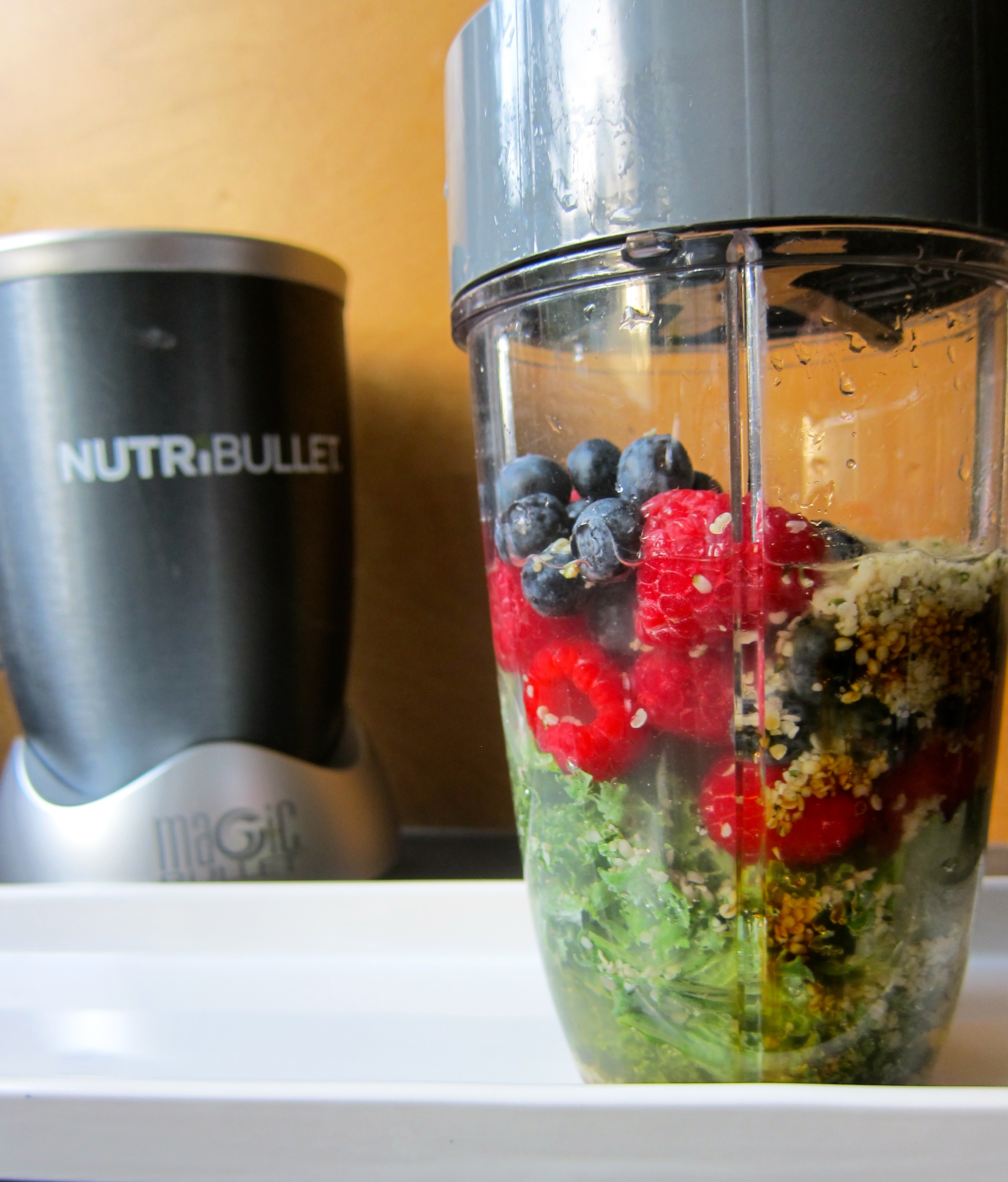
David Wolfe offered a DIY, improv-friendly NutriBullet recipe for Diary of a Social Gal readers with a base of blueberries, raspberries, coconut water, kale and a dash of honey. Optional ingredients included hemp seed (protein), hemp seed oil, or olive oil.
Food blogger Jittery Cook customized this concoction for Diary readers:

David Wolfe‘s Berry Kale Nutriblast Smoothie

Combine all ingredients in this order: kale, berries, seeds, sweetener, coconut water. Make sure you stay below the maximum line. Blend in the Nutribullet for 45 seconds. Sprinkle on a little cinnamon. Start sipping right away or carry your smoothie with you in the travel cup provided. Makes a single serving.


The Rise of the Bouffant

**Photos by John Mahony of the Montreal Gazette


MONTREAL – Walking around the ABA (Allied Beauty Association) hair show this week felt a lot like traipsing through a Tim Burton film set. Wayward crinkled curls, offset to one side, with green and blue extensions poking out, echoed looks from characters in Edward Scissorhands and Burton’s version of Alice in Wonderland.

If that sounds frightening, it wasn’t (necessarily) the case: the point of the look was to emphasize texture — one of the biggest themes at this year’s Palais des Congrès event, where manufacturers and distributors of professional beauty care products presented their latest innovations and techniques to Quebec stylists and industry insiders.

Some hair teams, like the one at Redken, took the theme in a more runway-friendly direction, presenting stunning beehives and bouffants reminiscent of the 1950s and ’60s. The final impression was glamorous and fashion forward, just the right mix for Redken hair model Pascale Hamel to declare “I love it,” about her updo, streaked with blue. “I think I’m going to wear it to work tomorrow.” (She works at Labatt.)

On the Australian Bangstyle stage floor, edgy sideswipes — asymmetrical looks were extremely popular at this year’s ABA — were presented alongside ’30s-style Marlene Dietrich tight curls, along with wavy strawberry blond locks cut with blunt bangs. These looks emphasized the point that the latest textured hairstyles could be bold and structured, crimped or curled, or gently tousled.

Here are a few must-dos from the show:


Paris Fashion Week from Elle.com
Textured bouffants

At Redken, bouffants were revived and reinterpreted.

Sean Godard, a Redken international performing artist, created one of the sharpest looks. It featured a smoothed-over beehive with an off-kilter French twist and was modelled by Marie Breton. The look was inspired by the Louis Vuitton Spring 2013 collection. “In the past it would have been very rigid and dated — and structured. Just by loosening it up a little bit, and changing the volume, changing the parting, makes it modern and more current,” Godard said.

Eve Champagne, a Redken hair artist at the ABA event, created softer bouffants, including the one for Hamel, where she wove blue and purple extensions through a mesh layer. For Alexandra Decterov, Champagne sculpted a soft, almost undone updo fastened with a red flower, again using texture and colour together “to give a little edge,” she explained.

As for the revived bouffant look itself, Terry Ritcey, national education director for Redken, says it’s all about rediscovering glamour.

Product: To hold those updos, Godard and Champagne use Redken Control Addict 28 ($18.59), a new ultra-firm hairspray introduced by the brand.


Asymmetric hair

Many hairdos at ABA were set to one side, creating a fresh impression that was just slightly askew. According to Marilyne Roi, a hairstylist with Bangstyle, the edgiest lopsided looks appear on short, loose locks. “To really exploit asymmetry to the maximum is to do it on short hair,” she said. Short hair easily lends itself to texturing clays and gels, she said, and can be shaped into more dramatic lines. At Bangstyle, the look came alive on Vicky Lemay, who was shown with shoulder-length candy apple red hair set to one side.

Roi said asymmetrical looks are very stylized and add tons of character, and are best suited for bold women.


And for the men

Men’s hair is less about trends, and more about a “one size fits one” mentality, according to Kurt Kueffner, who along with one of the creators of American Crew, developed the sleek new barbershop line Mensdept. “I think there’s a sentiment that it needs to be appropriate, timely, but it also needs to work with their hair type and their head shape,” he said. That being said, Kueffner does see some global trends: “I think any semblance of the faux hawk, Mohawk from the early 2000s hair is gone. You’re not seeing as much spiky hair or overdone hair,” he said. Now, men’s hair is a little more contained, accountable. “There’s more parts, there’s more shine, and there’s more healthy hair.” Kueffner believes Mad Men, Boardwalk Empire, and even actors like Daniel Day Lewis helped pave the way for this look.

Read more: http://www.montrealgazette.com/life/fashion-beauty/Textured+glamour/8091096/story.html#ixzz2TN48UtHD

The Taming of the Anti-Bride

This piece on planning a wedding was first published in Montreal Gazette’s society mag Diary of a Social Gal (PRINT EDITION) issue #1 http://diaryofasocialgal.com/virtual-magazine/

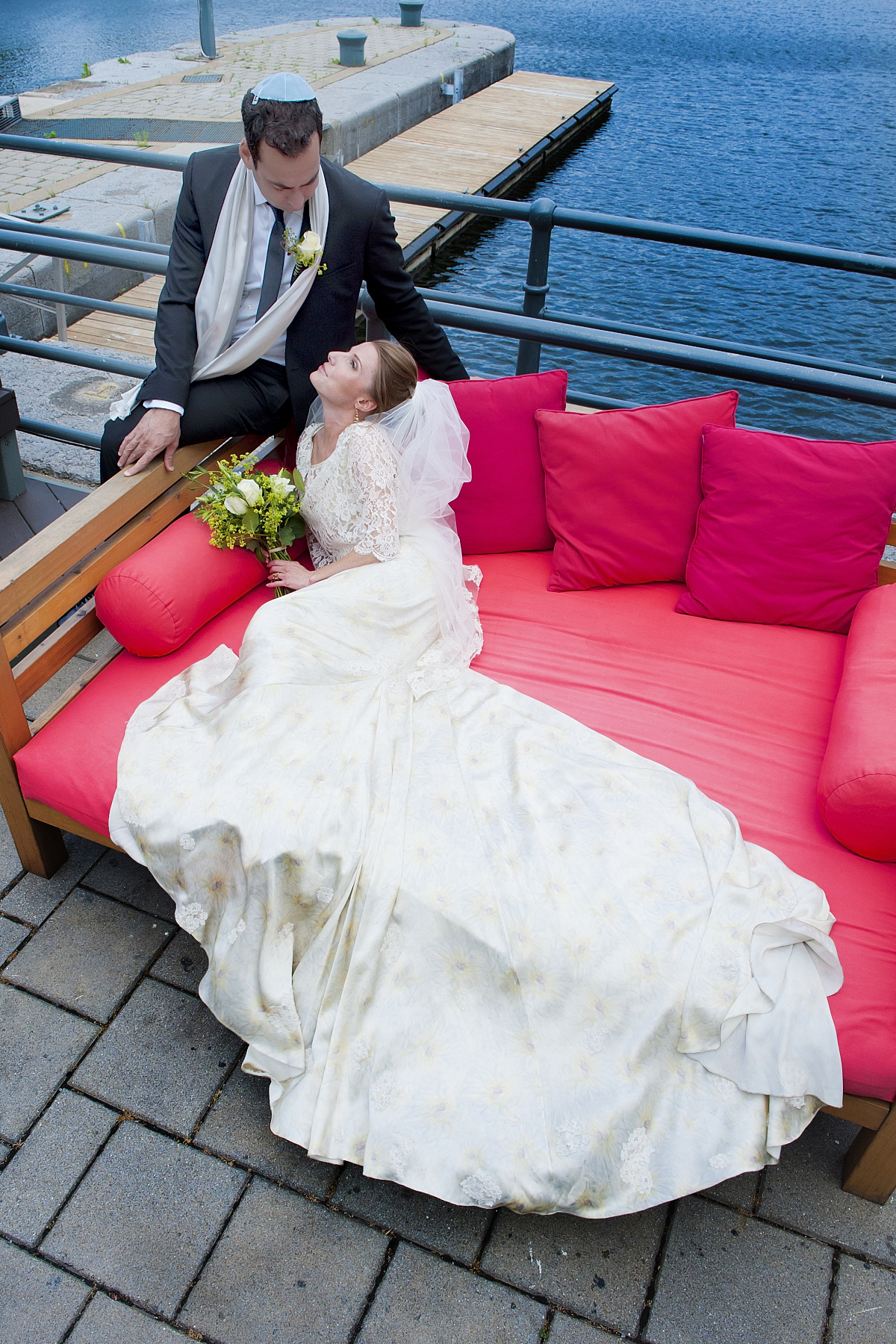
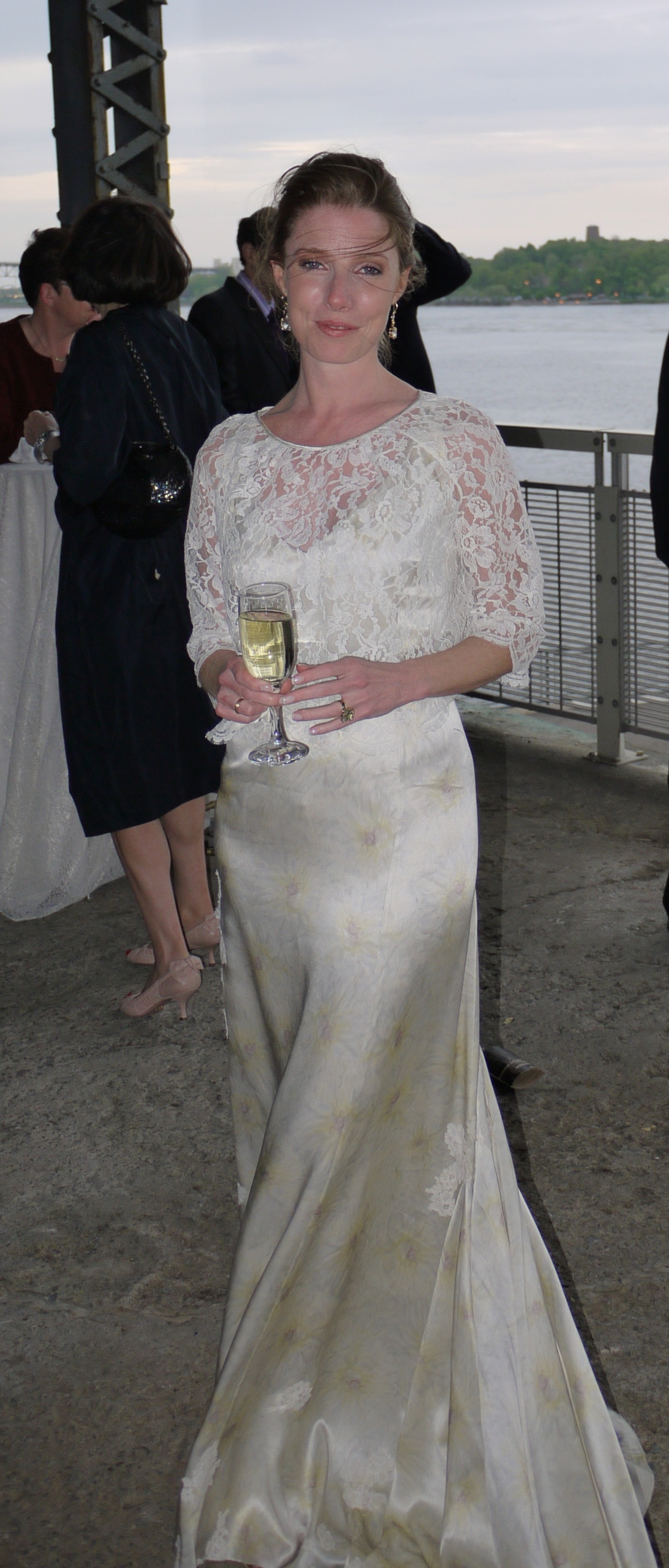
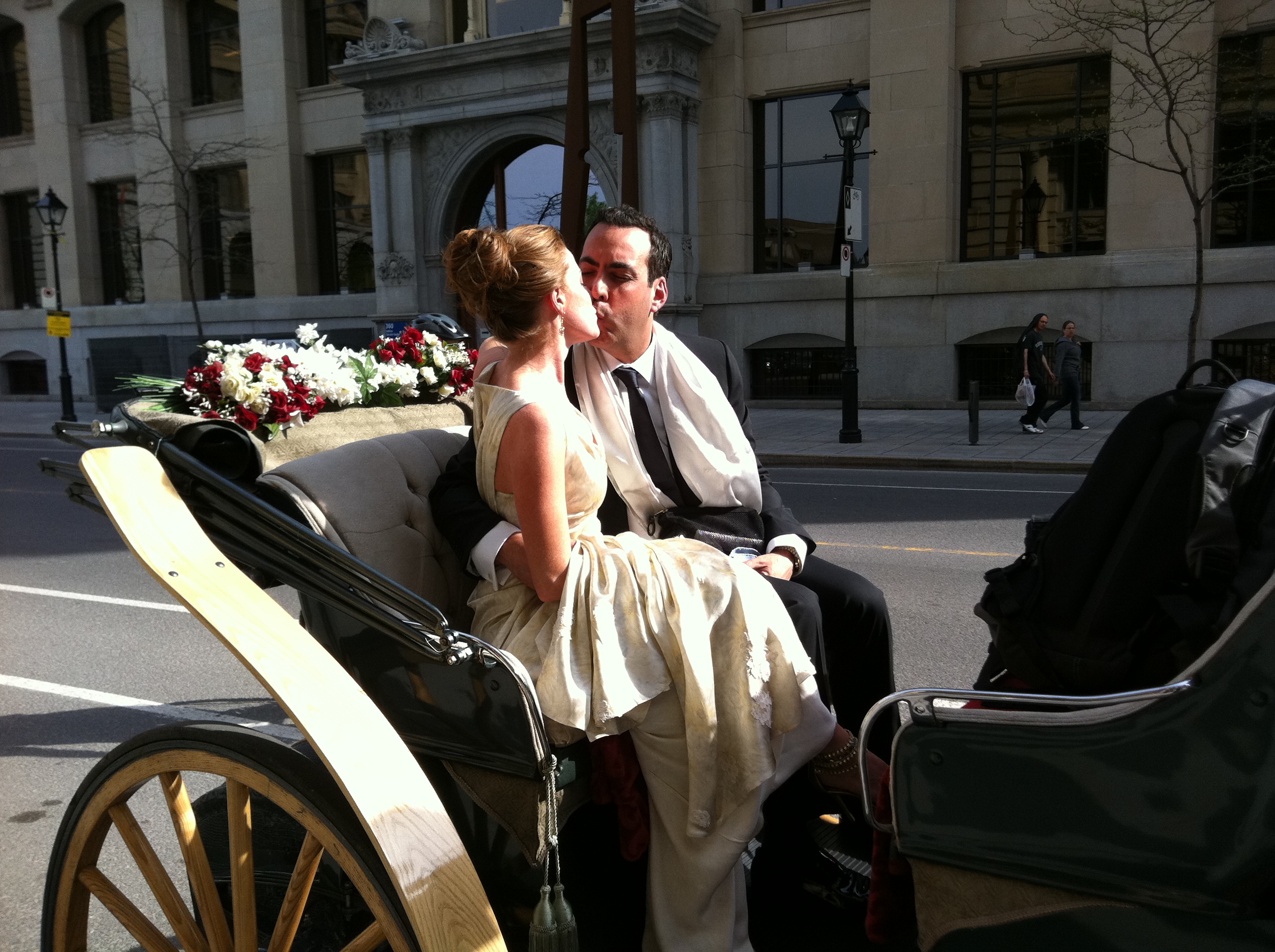
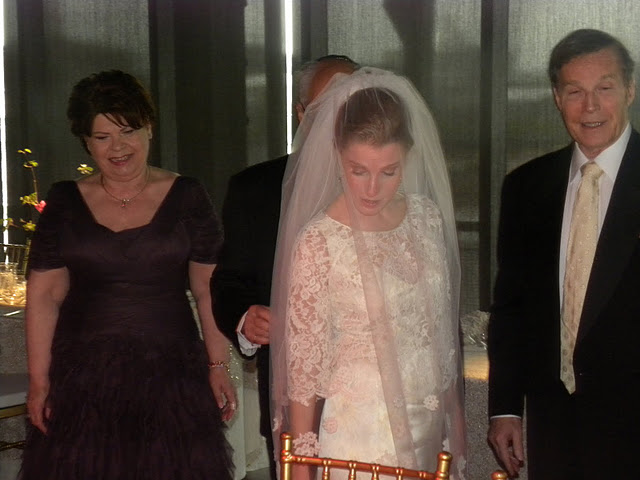
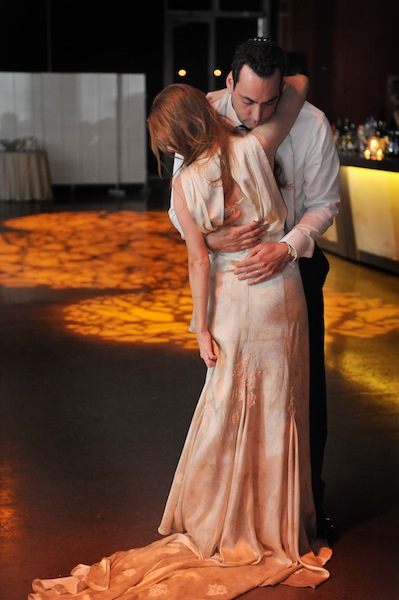
Before I reprint the essay, here are some wedding pix of me and Dave. Oh, yes, and my Erdem wedding dress of course!! Lucky me on many counts. FYI, the dress had a ceremony look, with cape and veil, and then it was just the sultry dress for the party portion of the evening..

Right after the ceremony:

Then, check it out!


Ka-Pow! Ok, that was fun. Will stop posting photos of my own wedding. Now on to the actual essay, which actually has to do with planning the wedding in it’s entirety and not just the dress, though that part was obviously beyond amazing.

THE TAMING
OF THE ANTI-BRIDE
 
A recent bride’s unbridled account of planning her wedding
 
 
BY SUZANNE WEXLER 
 
 When shows like “Say Yes to the Dress” or “Wedding Story” come on, I invariably flip the channel. Even as a little girl, I never had secret fantasies of wearing a puffy white dress, à la Princess Kate, or having an ornate ball thrown for me and my prince.
 
Tall, dark, and handsome Dave fortunately saw things the same way. When we decided to exchange vows, we envisioned the nuptials as a laid-back affair by the river at our new cabin in upstate New York.
 
Of course, the next thing we knew we’d reserved the glass encased Belvedere Room at the Montreal Science Center. Our guest list burgeoned from about 60 to 160 in a nanosecond. Then there were overseas guests to consider.
The room was still on the water—the same body of water, in fact. Plus, there was “science” in our venue’s title, which seemed to keep things real. So in the name of just making a decision, our bucolic BBQ gave way to an upscale urban-chic soirée. 
We were glad about throwing a snazzy shindig, but the trick now was to refuse cliché. That is, to avoid having a wedding with stiff-looking centerpieces and big white bows wrapped around chairs.
We’d already managed to reject the diamond engagement ring, and knew that high-rolling bridal norms were tricky to avoid. 
 
Unless couples boldly wear head-to-toe red outfits to the ceremony, the industry—along with its plentiful cheerleaders—shamelessly strong-armed you into convention. Meanwhile, we simply wanted a fun and fancy wedding with no cake and no froth. No problemo, right?
 
THE DRESS
 
At first, it was difficult from me, or anyone, to imagine incorporating an outdoorsy country style into a swanky indoor venue. So, as the designated organizer, I decided to focus on my slightly unconventional wedding dress instead.
 
Having famed Montreal-turned-London designer Erdem Moralioglu as a close pal and potential wedding dress couturier was ideal, since he’s not in the bridal business per se. Rather, his runway collections feature stunning, picturesque party dresses, which may be white, but just as easily not. As a generous personal favor, he happily agreed to the project. He suggested going with a pattern.
 
“Yes,” I said, practically swallowing the phone. An image of an old-timey art deco dress flashed before my eyes. I then mentioned that I wanted the dress to be sultry, but still modest enough for the rabbi. Erdem said he wanted the dress have “a slit and really long train”. So lovely to agree.
 
We met up in New York and had virtual fittings via Skype. My mother even joined in and helped select among all the beautiful fabrics Erdem proposed, choosing a champagne silk satin with the palest yellow floral print.
 
Minus the fact that whenever Erdem and I sent the dress in the mail it kept getting momentarily lost or seized by customs, the whole outfitting project was a whirl. Even Dave seemed to grudgingly enjoy our day at Harry Rosen selecting his Dolce & Gabbana tux, and sealing the look with a skinny tie and a silk Armani scarf.
 
(Don’t worry more pix follow this story!!!)
 
THE PLANNING
 
Our design-it-yourself wedding was off to a positive, albeit effortful, start. Inspired by Erdem’s dress, I was now likening the affair to a garden party in Italy. ‘Dress Beautifully’ was printed on our eco-friendly invitations instead of ‘Formal Dress’. While it may have taken some explaining, our best collaborators turned this concept into magic. Giorgi Romano of Tradition Catering presented us with an elegant family-style meal of self-serve mashed potatoes and Tuscan salad, along with an à la carte portion of roast prime rib of beef. Gilles Lord and Denis D’etcheverry of Flore nailed the garden cut spring-inspired arrangements of tulips, roses, and lilacs, which were scattered about the table with fresh basil and parsley. So light, so fresh.  
 
Others interpreted our concept as “shabby chic”—not quite, but at least they were trying.  And family members were somewhat weary of the twenty-four person banquet tables we’d chosen, but they eventually agreed.
 
Meanwhile, big problems arose after I hired a wedding planner to help coordinate the busy day. Next thing I knew, I was flooded with her endless bridezilla emails about ‘The candle holders!’, ‘The first dance song!’ And she really lost the plot when she set-up our nature-inspired ceremony indoors on our overcast wedding day (‘The old ladies’ hair!’ she fretted.). Fortunately, Erdem and Denis from Flore took creative control and reinstated the riverside plan.  
 
Another bridal cupcake was thrown in my face when we took a horse and buggy ride from the St. Paul Hotel to the ceremony on the pier’s edge (I was inspired by the film ‘Barefoot in the Park’). The carriage came to a halt about a football field-length away, as it was banned from the property. Dave and I had to sprint all the way to the ceremony—and I was wearing four-inch heels.
 
Such an ironic entrance for Erdem’s gasp-worthy dress, I considered puffing past the IMAX. But if we wanted a carefree wedding, it was obviously time to let go of the reigns.   
 
 
TA-DA!
 
It all came together in a blissful crescendo. As I walked down the aisle, I saw my friends and family gathered around—some were standing, some were sitting, some were holding cocktails. All were smiling. Then there was the handsome Dave, standing overlooking the river. A day cruise ship had come to a halt below, and dozens of tourists started snapping pictures of us. Spontaneous, indeed.    
 
For the religious ceremony, Erdem created a delicate lace cape that fastened from behind, concealing my plunging neckline. He then embroidered lace flowers onto the gown’s three-meter train and then onto the veil, so that the fabrics all blended into each other. The look was more bridal than I originally anticipated, but it was in perfect harmony with the flowing lace huppa we’d rented, and the sinuous satin of my dress and Dave’s scarf rippled in the wind. Our guests were so taken by the moment that many joined in song with our female cantor and good friend Daniella Gesundheit of the band Snowblink.   
 
The party portion of the evening overlooked the city’s glorious twinkle. For music, we had a bongo player start things off, and then DJ Jonny Jungle masterfully mixed dance tunes with the rustic rock music we’d requested (Elvis Costello, Dolly Parton). But by far the best song of the night was performed by Dave himself, who dazzled me by singing me the coolest version of CCR’s ‘Suzie Q’ imaginable (adapted as ‘Suzie W’) with his incredibly talented friends joyously banging on pots and pans as accompaniment.   
 
As I kicked up my sparkling René Caovilla heels, my messy up-do came down and my lace cape came off, leaving me with the sultry satin finish of the old Hollywood-style gown. I can still feel Dave’s hands on my waist as we danced the night away, cavorting like a freewheeling couple at a Frank Sinatra party.
 
Yes, ours was something of a high-maintenance affair—and no, we didn’t exactly stick it to the bridal industry. But all that stiffness we ultimately feared had been sucked away. Instead, tradition was balanced with the pushes and pulls of modern whimsy; even the dress’s floral motif echoed the garden-style table arrangements, as the breezy essence of the outdoors and indoors fused together.
 
Funny to think, I now dream of my wedding day after the fact. And because we dared to unravel the bridal box, potential clichés like the dress, the flowers and the menu—along with one sweet serenade by the groom—turned out to be the icing on the cake we didn’t even have. 
Now for more pix! (I hope this is as much fun for you as it is for me.. I hope you read my next essay too btw)
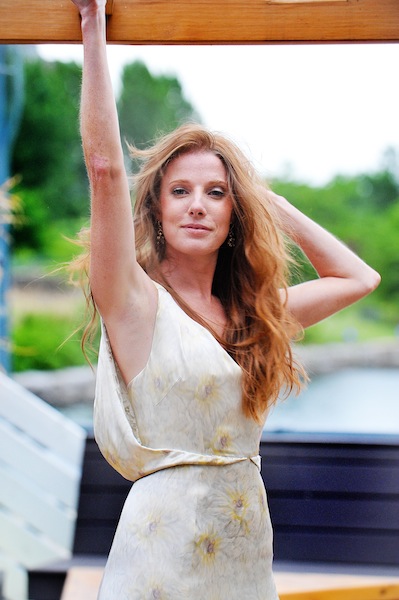
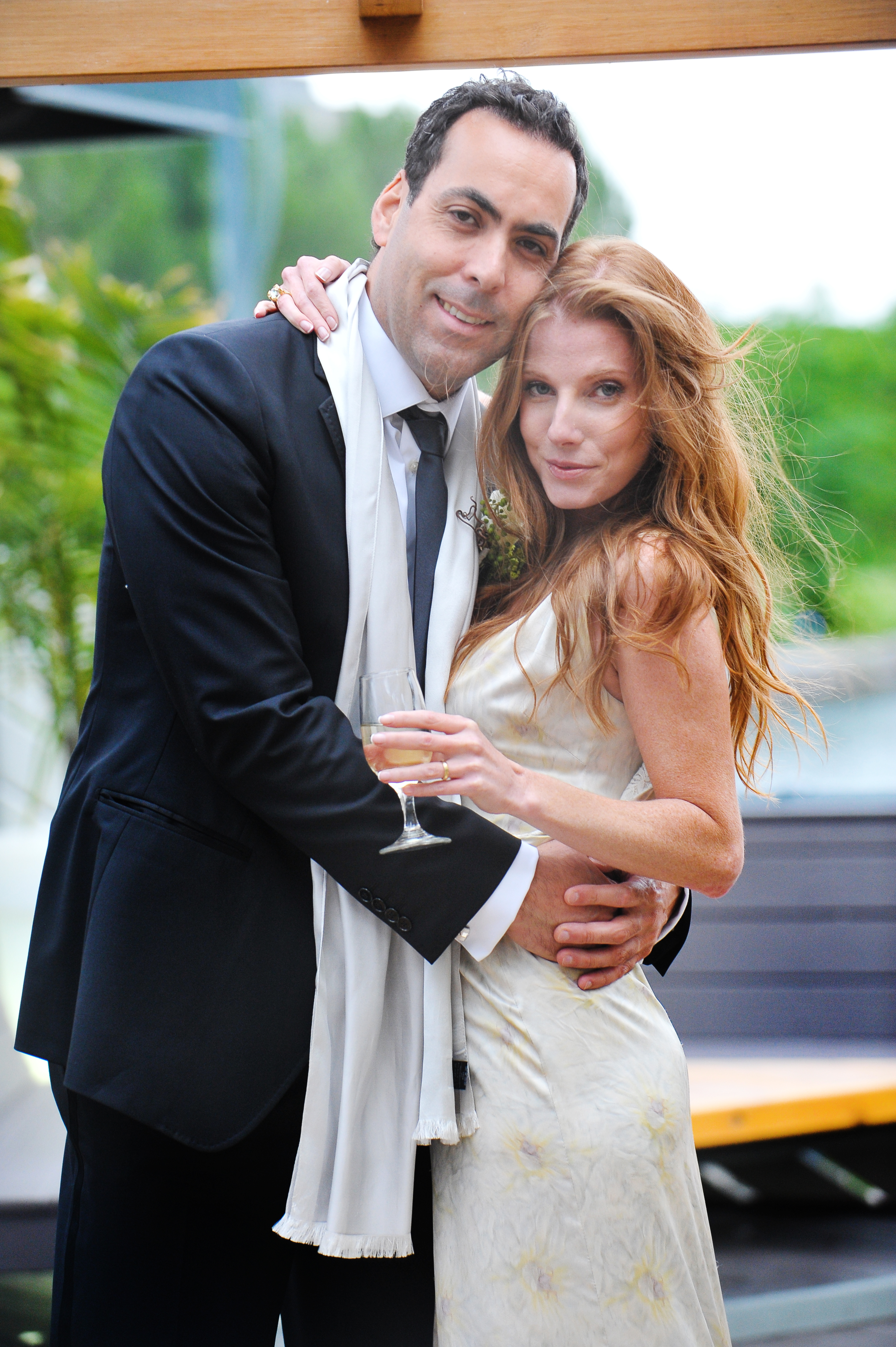
The happy couple! We took these after the wedding incidentally. Got all dressed up again about a month later, new bouquet and everything.

There’s Something About Seniors


***Images from PowerHouse books.


These days, women 70 and older are expanding our gaze to appreciate one of the most often forgotten forms of physical beauty: old age.

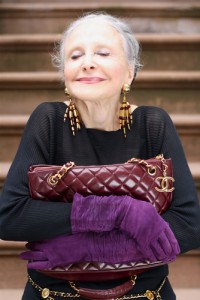
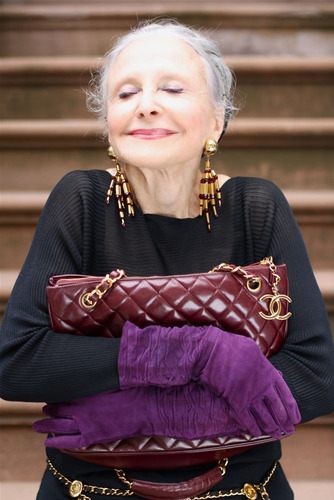
That’s right: Our obsession with youth and smooth skin has just been given a wrinkle that may never be Botoxed. A stunning book called Advanced Style (PowerHouse Books, $40) by street style photographer Ari Seth Cohen released this month captures New York City’s most elegant grandes dames. They sport glamorous hats, gold drop earrings, oversized glasses and colourful vintage scarves. Many are regulars on Cohen’s popular blog (advancedstyle.blogspot.ca), on which the book is based. There is also a third prong to the project, a documentary, which will be released this summer.

“I’ve always been interested in style and fashion, and I thought it would be a great way for people to have an inspiring image of what it is to grow older,” Cohen, 30, said of the project, which he started four years ago as an homage to both his grandmothers.

The book’s cover art features the glorious Gitte Lee, a former model revived in an Italian Vogue 2010 editorial.

A few pages later, there is the simply named Rose, wearing a purpled print kimono dress. At 100 years old, she insists no outfit is complete without an eye-catching belt or elegant strand of beads.

Marc Jacobs was so inspired by Cohen’s blog, he based his Fall 2012 collection on it, the designer revealed to WWD and the New York Times.

“I hope I’m like this when I’m older,” Kim Kardashian tweeted upon viewing the YouTube trailer to the Advanced Style documentary, a playful four-minute clip featuring mega-stylish seniors praising colour, leopard print and larger-than-life accessories.

To them, fashion is a vibrant form of self-expression and an unrelenting source of creative freedom.

“I get emails from younger women all the time saying, ‘I can’t wait to get older’ – that’s the most amazing thing to me,” Cohen said. To him, Advanced Style was always about more than capturing golden- and platinum-age fashion: It was about showing how his muses are advanced in many aspect of life. “Style is a reflection of their vitality and spirit,” he said. Many of his subjects experience daily pains and have suffered through tragedy, but they still enjoy their lives brilliantly. Fashion is simply one of those ways.

Cohen adds quotes to the photos in the book, and posts videos of seniors on his blog, where their personalities come through, and are ultimately where Cohen’s project really hooks you.

“I’m old and nobody has to like (what I’m wearing) as far as fashion is concerned,” says Ilona Royce Smithkin, a 92-year old artist-turned-cabaret performer (who still performs), in a video.

With bright orange hair and long matching eyelashes, Smithkin is one of Cohen’s more eccentric dressers and wittiest personalities. “As long as I look in the mirror and (see) – AH! – this is me,” she says, everything is all right. A Q&A with burlesque star Dita Von Teese and Smithkin is printed at the end of the book.

Once entrenched in Cohen’s old-timey world, and peering through his rectangular looking glass – whether in blog, book or video form – one’s eyes are changed for good. Even Beatrix Ost who wears a vibrant emerald turban (for fashion, not religion) with a matching flower appliqué suddenly doesn’t seem, well, so kooky anymore. Rather, personal style becomes an invitation into someone’s autobiography.


Style strata

Since most advanced-style women shop within their own closet, Cohen says, their wardrobe not only reflects their personal style, but also the era they come from.

“Women in their 80s, 90s, and 100s dress very differently from women in their 60s and 70s,” he points out. “This sense of elegance of grace, and putting on hats and gloves, is definitely more alive in the older, older women.” During the Depression, he says, style was ultimately a sign of dignity and not giving up. This mentality continued in later life.

Meanwhile, women in their 60s and 70s “went through feminism, and they were influenced by hippie culture,” he said. As a result, some wardrobes tend to have ethnic and even punk influences.

Seventy-four year old Montreal model and actress Francine Lacroix still has a talent agent: Sybille Sasse, one of the few who will represent models 60 and older. Lacroix has fond early memories of fashion. She is also amazed about how much has changed over the years.

“My fun growing up was looking at my mom before she went out at night,” Lacroix said staring off wistfully. “I thought she was beautiful, and she was.” Her father owned well-known furrier J.K. Walkden on Sherbrooke St. downtown, and she can remember the pair heading off to the opening of the Queen Elizabeth (1958), the opening of Places des Arts (1963), and, and then to Expo 67. Her mother often wore custom garments by Leo Chevalier, Marie-Paule Nolin and Michel Robichaud.

As her everyday dress code, her mother used to wear a tweed skirt, a cashmere sweater and pearls. But only a generation apart, and outliving her mother by a number of years, Lacroix says she is deeply influenced by casual dressing. She wears Hue jeggings to the mall.

“There were all kinds of balls with the long white gloves,” she recalls of her own glamorous past spent with her late husband, who worked in advertising. Yet today, for openings at the Musée des Beaux Arts, or at La Maison Symphonique, which she still attends, Lacroix dons a nice slacks suit and cape. Because of arthritis, she says she avoids heels (“I wish I still could!”), and says that pants look better than skirts and dresses with the sensible footwear. Rarely does any event she attend require greater formality than a pantsuit.

Lacroix acknowledges that many Montrealers still live glamorous lives but there is a certain formality that is gone. For instance, people here once danced and dined at the piano bar, which has been uprooted by loud, casual restaurants. New York women, like the ones Cohen photographs, are the rare few who can still enjoy that element of life.

“We hope elegance lasts,” she says, noting how daughters used to copy her mothers’ fashions and now it’s the daughters who tell the mommies what to wear. Today, Lacroix also tries to mix and match like young women do. She’ll toss together a blazer, a pair of pants with Hermès jewels and scarves she collected on exotic trips with her husband. “I think it’s so much fun,” she says of the approach, even though she grew up wearing matching skirt suits, and regards formal style with nostalgia. But however casual Lacroix deems herself to be, her style, her jewels, and her radiant complexion (she swears by Lancôme beauty products) tells of her glamorous past.


Facts of life

Living to a certain age, where arthritis becomes a problem for the feet, and buttons become a challenge for the hands, there are certain wardrobe tricks many seniors turn to. Namely, elastic waistband pants, slipover tops, shirts with Velcro, long sleeves and mock turtlenecks. Clothes tend to be less clingy, too. But true advanced-style women, such as the ones selected by Cohen, tend to gravitate toward fine fabrics regardless of physical constraints. They’re also masters at making a stylish impact with bold palettes and accessories.

Cohen’s Valerie (part of the Jean and Valerie fashion duo) may wear head-to-toe leopard print; Mary says “sunglasses are better than a facelift”; Joyce wears gold chandelier earrings and carries Chanel bags; and elegant 80-year-old former dancer Jacquie Tajah Murdoch wears a long black dress, an oversized hat and boasts sharp red painted nails. But in general, there is a formula, Cohen says. “They love accessories and tend to be very good with colour, which helps them feel ‘less invisible,’ ” he says. But their biggest trick, he says, is knowing what they are comfortable wearing.

The hats, the gloves, the confidence, the glamour – there are many reasons why Cohen’s muses and senior style in general seem to be impressing upon younger generations. And while senior fashion fever may not have picked up much beyond Vogue’s annual Age Issue just yet, trendsetters sure seem to be paying attention.

To get a taste of Cohen’s Advanced Style documentary: visit youtube.com and enter the keywords: advanced style film trailer.